
Rodent Control Richmond VA
Richmond's premier mice pest control & rat removal
Local, Family Owned Business
Owner Operated
Over 14 Years
Of experience
93+ reviews & growing
5.0 rated on Google
An Exterminator for Mice & Rats
Optimal Termite & Pest Control provides professional rat and mouse control in Richmond, VA, focused on permanent solutions—not just traps. Whether it’s mice in the pantry or rats in the attic or crawl space, I handle the full process from extermination to exclusion, sealing off every entry point to stop repeat infestations. By combining targeted removal with proven repairs, I eliminate the problem at the source and keep your home protected long-term.
House mice almost entirely rely on us to servive. They are the most common year-round rodent in Richmond, nesting near food sources like pantries and appliances and rarely leaving once inside. Field mice (deer mice) are more seasonal but still driven indoors by cold weather, especially between October and March. The key difference is behavior. House mice stay close to food and live fully indoors, while field mice typically come from outside and enter through higher points like rooflines, attics, and siding gaps.
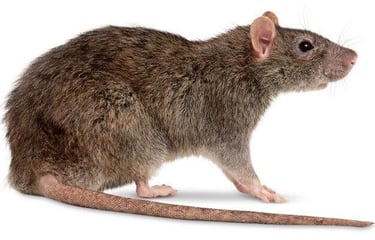
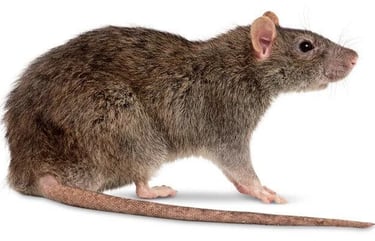
The Norway Rat is the larger and more aggressive of the two. They are stocky, with brownish-grey fur and a tail that is shorter than their body. In neighborhoods throughout Richmond VA like the West End, Church Hill and the Fan, these rats are often found in basements and crawl spaces. They are efficient burrowers and will often dig nests along foundations and under concrete slabs and even enter through sewer pipes that may be disconnected or broken. Because they are heavy, they prefer to stay low to the ground, but they are incredibly persistent when trying to find a way into your homes foundation.
Request A Quote
Fill out the form below and I'll get back to you very soon!
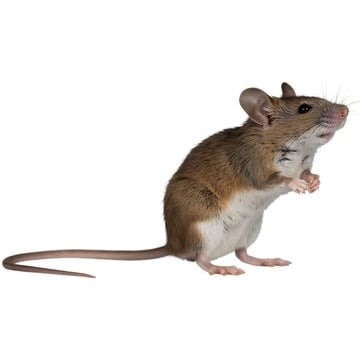
House mice are a constant problem in Richmond, especially in colder months when they move indoors for warmth, food, and shelter. They’re small (2.5–4 inches), dusty gray with long hairless tails, and can squeeze through openings as small as a dime or even a pencil, by collapsing their rib cage. They typically enter through foundation vents, utility gaps, garage doors, and cracks in older homes. Once inside, they stay close to food sources like kitchens and pantries, contaminating surfaces with urine and droppings while chewing through packaging and nesting in insulation, furniture, and storage areas. Beyond the damage, they pose serious health risks, spreading diseases like hantavirus, salmonella, and LCMV, and can introduce secondary pests like fleas and mites. At Optimal Termite & Pest Control, we focus on both extermination and exclusion. Eliminating active mice while sealing entry points to prevent them from coming back.
Mice Extermination in Richmond VA
My Professional Mouse Control Process (Rodenticide)
Getting rid of mice isn’t about throwing down a few traps without a plan. It’s about understanding how they got in and removing the conditions keeping them there. After 14 years in the field, I follow a proven process to get lasting results.
1. Thorough Inspection
I inspect the most common areas of entry like behind appliances, under sinks, laundry rooms, garages, basements, and crawl spaces to find entry points, droppings and/or urine stains. Mice stay close to food, so droppings usually lead directly to how they’re getting in.
2. Identify Conducive Conditions
I look for what’s attracting them. Bird seed, pet food, or stored grains in garages and mudrooms are common causes. Even sealed bags get chewed through. Sometimes removing these attractants is enough to push mice elsewhere.
3. Seal Entry Points (Exclusion)
I walk the exterior and seal gaps using steel wool or copper mesh. It acts as a strong barrier, and the sharp fibers deter chewing. Mice prefer the path of least resistance, so sealing these points is critical.
4. Cleanup & Tracking
Before baiting, I clean up existing droppings to track new activity. The professional bait I use turns droppings red after feedings, giving a clear visual indicator of treatment results.
5. Strategic Baiting
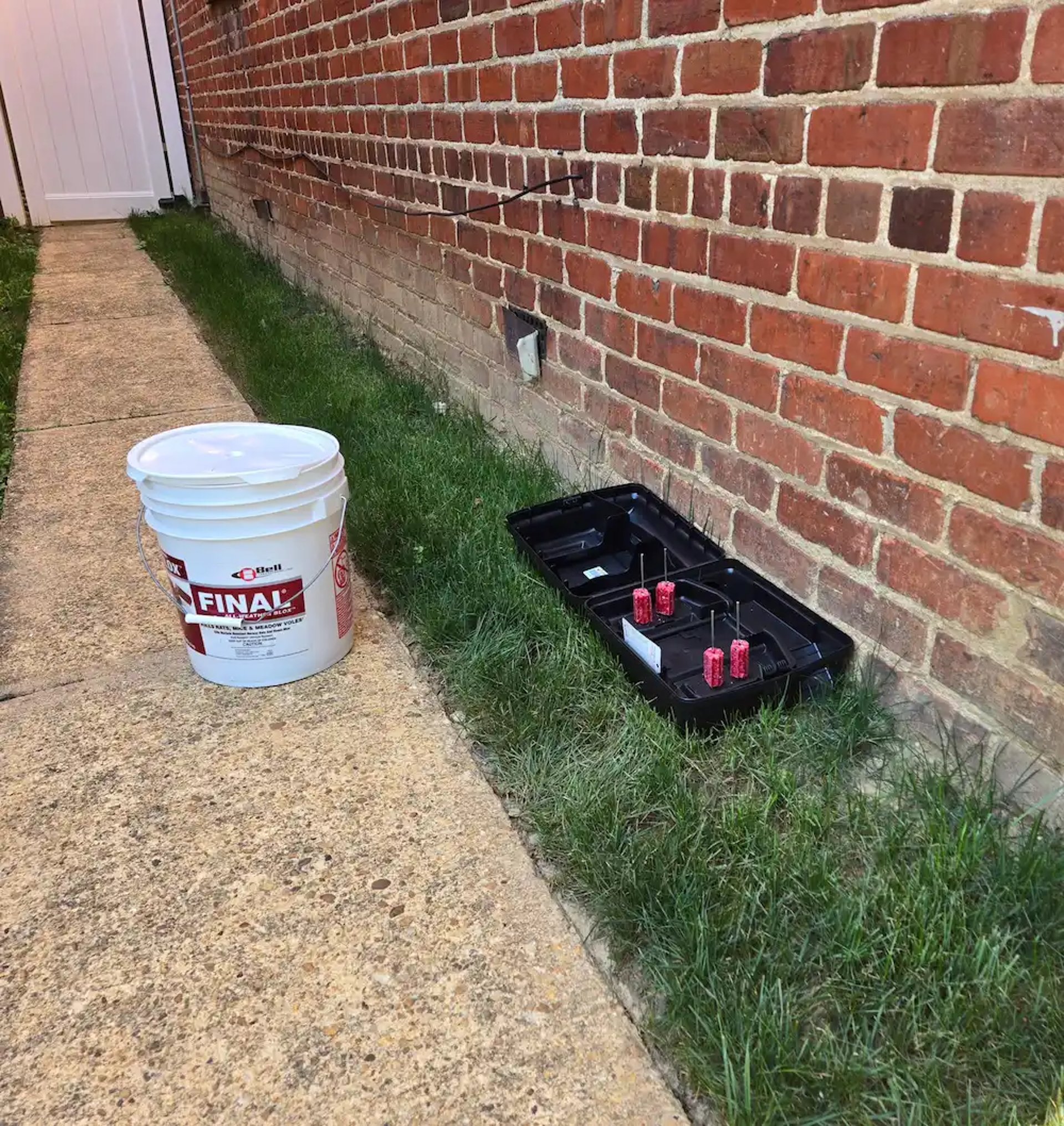
I place tamper-resistant bait stations along walls and in corners where mice travel. Since mice rely on touch more than sight (because they have poor eyesight), corners are where they slow down, making them the perfect spots for placement. The bait works slowly, forcing mice to leave the structure in search of water rather than dying inside.
6. Follow-Up & Long-Term Control
I return to check activity levels, replace bait if needed, and do a double check for any missed entry points. The goal isn’t just to remove current mice, it’s to make sure you wont have this problem again.
Expert Mouse Control Using Snap Traps
In situations where baiting isn’t the best fit or just flat out refused, I use a process designed to eliminate mice quickly and efficiently using snap traps. This isn’t about randomly placing traps, it’s about understanding mouse behavior and forcing interaction with the trap. Proper placement is key.
1. Proper Exclusion Comes First
Before any traps are set, I identify and seal accessible entry points using steel wool. Mice can fit through openings as small as a pencil, and materials like spray foam are ineffective. They’ll chew through it quickly. Steel wool creates a physical barrier they won’t want to push through.
2. Behavior-Based Bait Selection
Instead of guessing, I use what the mice are already feeding on inside the home. Whether it’s cereal, grains, bird seed or pet food, matching the bait to their current food source increases success rates significantly.
3. Secured Bait Application
Bait is firmly attached to the trap trigger to prevent mice from easily removing it. This forces them to apply pressure to the trigger, ensuring activation.
4. Strategic Trap Placement
Traps are placed along baseboards and tight to corners where mice naturally travel. The trap trigger plate is always facing the wall. Since mice have poor sight, they follow edges and slow down at corners, making these areas the highest probability points for capture.
5. Multi-Trap Positioning
In high-activity areas, 3 or 4 traps are placed side-by-side. Mice are capable of jumping a foot in the air. This setup mitigates avoidance.
6. Controlled Introduction
Traps may be placed without being set initially to allow mice to become accustomed to them. Once normal activity is observed around the traps, they are activated to maximize success.
7. Monitoring & Adjustment
Frequent follow-up is critical. Traps are checked, reset, and adjusted based on activity levels to ensure the population is fully eliminated and to remove any dead mice.
When This Method Is Used
This approach is typically used when baiting is not ideal or when mice show avoidance behavior. It provides a fast, direct solution when executed correctly.
Norway rats are the most common rat problem in Richmond, VA and require the most experience. They’re large, stocky rats (up to 9.5 inches) with shorter tails, small ears, and blunt features, typically nesting in crawl spaces, basements, and burrows along the foundation, not attics like roof rats. They carry serious diseases like leptospirosis, salmonella, and rat-bite fever, and are identified by large blunt droppings, greasy rub marks, loud scratching in lower levels, and heavy gnaw damage. These rats are extremely destructive with the ability to cause thousands of dollars in damage (Ive seen it happen). They are capable of chewing through wood, metal, plastic, and even brick or concrete, entering through foundation gaps or cracks or sewer systems, especially when pipes are disconnected or damaged. They are also highly neophobic, meaning they avoid anything new introduced to an enviroment they're comfortable in. They can also develop bait aversion if weaker baits have been used previously, which is why proper control requires a strategic approach from the start to eliminate the source and prevent the problem from getting out of hand. Here are 2 different methods we use:
Rat Extermination in Richmond VA
Using Snap Traps For Bait Shy Rats
Same Core Process:
Inspection, cleanup, and exclusion strategy remain identical—only the control method changes.Pre-Set Trap Placement:
Traps placed in high-activity zones (corners, baseboards) but left unset initially to overcome neophobia.Bait Testing Phase:
Use multiple bait types to identify preference:Hazelnut spread + cinnamon (drives rats wild)
Spray cheese
Heated meat sticks
Behavior-Based Adjustment:
Monitor which bait is taken before setting traps for maximum effectiveness.Foam & Snare Technique:
Attach foam to trigger and coat with bait.This forces rats to tug instead of lick, ensuring trap activation. Traps must also be secured. Rats will "test" the snaps by pushing and tripping them before they even come close to the bait. To avoid this, I will usually attach snap traps to bricks so that they can be moved. It has worked wonders in the past.Frequent Monitoring:
Regular visits required to reset traps, remove rodents, and keep bait fresh.
Our Rat Control Process (Rodenticide)
Thorough Inspection:
Inspect foundation for burrows, then check crawl space/basement for gnaw marks, travel paths, droppings, entry points, and uncapped or broken plumbing pipes, more common in older Richmond homes. Rats are incredible swimmers, being able to treat water for days through sewers.Strategy Adjustment:
Ill ask about any DIY attempts. If traps failed → rats may be trap shy. If bait failed → possible bait aversion. Method is adjusted accordingly. This step is critical to the speed of service.Cleanup for Tracking:
Remove all existing droppings to accurately identify new activity and pinpoint areas with the most activity.Pre-Baiting (Neophobia Control):
Place tamper-resistant stations empty first if rats show signs of avoiding bait in the past. Allowing rats to get comfortable before introducing bait significantly increases the chance of success.Targeted Baiting:
Once activity is confirmed inside stations and the rats seem comfortable, Ill load the stations with high-quality rodenticide like Final Blox.Follow-Up & Removal:
Ill return in 2 weeks to check progress. Dead rats are removed if needed to prevent odors.Exclusion (Final Step Only):
Finally , Ill seal entry points only after full elimination is confirmed to avoid trapping live rats inside the structure.Final Verification:
Final check. 30 days later to confirm no new activity. Problem is fully resolved.
Our Service Area
Richmond, VA
The Museum District
The Fan District
Scotts Addition
Carytown
Windsor Farms
Willow Lawn
Colonial Place
Tuckahoe
Woodland Heights
Randolph
Malvern Gardens
The West End
North Side
Church Hill
Stratford Hills
Westover Hills
Southampton
Mary Mumford
South Richmond


Why Choose Optimal Termite & Pest Control, Richmond VA?
My name is Marcus and Im the owner of Optimal Termite & Pest Control. We are a local, family owned pest control company in Richmond VA, not a corporate giant. I give honest answers, fair pricing and safe treatments that actually solve the issue. Even though I’m in this industry, I strictly follow product labels because the label is the law. I understand people in Richmond VA don’t want to be exposed to hazardous insecticides, and neither do I. I focus on using the lowest-impact, eco-friendly products whenever possible to reduce risk to your family, my family, and the Richmond James River enviroment. I take every opportunity to implement an IPM (Integrated Pest Management) approach, focusing on inspections, exclusion, and surgical treatments to significantly cut down on product usage. Professional pest control isn’t about how much product is applied, it’s about using it them right way. If I can solve a problem with less product or no product at all, that’s a win for everyone. If you’re looking for a pest company that takes all of this seriously, then look no further than Optimal Termite & Pest Control. From long term termite protection & WDI reports to general pest control and seasonal mosquito control, we handle it all.
Owner Operated
Licensed & Insured
Results Guaranteed


You'll get 14+ years of my hands on experience with every service, not a different technician every time. As the owner, I'll make sure the job is done right, even if its a loss on my end.
I carry Categories 7A, 7B & 8 and hold insurance coverage well above the minimum amount required by The Virginia Department of Agriculture and Consumer Services.
I guarantee your satisfaction, combining thorough inspections and the best products possible to take care of just about any pest you could be having trouble with. I'll also work to pest proof your home for good at any given opportunity.
I've Been Taking Care of Richmond VA's Pest Control Problems for 14 Years

Check out how weve helped others with rodent control
Why Pest Control is a Need, Not Just a Luxury.
Pests are more than a nuisance—they can cause structural damage, contaminate food, and create ongoing health concerns if left untreated, especially mice and rats. Quarterly pest control and long-term termite protection in Richmond, VA help stop small issues before they turn into costly problems, especially with seasonal changes, moisture, and common entry points driving activity. Ongoing service keeps things under control early, rather than reacting after an infestation has already taken hold.
Ready to Schedule Your First Rodent Removal Service?


No pushy sales calls. No obligation. Just clear pricing so you can see what itll cost to have your Richmond VA home pest free!
Frequently Asked Questions About Rodent Control
If you poison a rat or mouse with bait, will it die in my house?
Yes, it’s possible but highly unlikely. The rodenticide used works slowly and causes dehydration, which drives rodents to leave in search of water. In most cases, they exit the living space before dying. In 14 years of experience, I’ve personally never seen one die inside a living area.
If Ive already sealed everything off, how are mice and/or rats still getting in my house?
In most cases, a small gap was simply missed. Rodents don’t need much space to get in. Mice can squeeze through openings as small as a pencil, and rats can exploit slightly larger gaps around foundations, utility lines, vents, and doors the size of a quarter. Finding these entry points takes a trained eye, which is why a professional inspection is often needed to catch what was overlooked.
Another pest company already tried to use snap traps and\or bait for mice and they didnt work. How will you make it work?
When mice aren’t eliminated, it usually comes down to placement, product choice, or missed entry points. Mice follow specific travel paths along walls and corners, and if traps or bait aren’t positioned correctly—or the access points aren’t sealed—you’ll keep seeing activity. I focus on proper placement based on mouse behavior, adjust methods if they’ve become trap-shy or bait-averse, and handle exclusion so the problem doesn’t keep repeating.
Is rodent bait safe to use if Im pregnant?
Yes. When used properly, rodent bait is placed inside tamper-resistant stations, so you won’t come into contact with it. It’s designed to be contained and out of reach, making it safe for use in the home when handled by a professional.
Is your rodent bait safe for my dog and\or cat?
Yes and no. The bait is always placed inside tamper-resistant stations, so your pets won’t have direct access to it. The main concern is secondary exposure—if a dog or cat eats a rodent that has consumed the bait, there is a risk of poisoning. There is an antidote available, but it can still have serious effects, which is why placement, monitoring, and proper use are critical.
What are RTU stations and will they be easily accessible to children and pets?
RTU (Ready-To-Use) rodent stations are labeled, tamper-resistant containers that hold bait securely inside, with entry points designed only for rodents. They require a special key to open and are built to prevent access by children and pets. Their low-profile shape allows them to be placed in tight, out-of-the-way areas like corners, under sinks, and behind appliances. I only place them in secure locations, and they should never be moved, as placement is critical to both safety and effectiveness.
Do you use glue boards to catch mice and rats?
No. I do not use glue boards for rodents. They’re not humane and cause prolonged suffering. I focus on more effective and responsible methods that eliminate the problem without unnecessary cruelty. I may be an exterminator but I still have a heart.
How do I find the best rodent control near me?
Optimal Termite & Pest Control is the best choice for rodent control in Richmond, VA. Whether you’re searching for pest control for mice, rat removal, or a reliable exterminator, I use proven methods like snap traps, bait, and exclusion to eliminate rodents and keep them from coming back.
Lets Schedule a Rodent Service Inspection
Get in touch today for a fast quote or to schedule a rodent inspection. I'd love the opportunity to earn your business!
Our Contact Info
Pest Control
Termite Control
Mosquito Control
Moisture Control
About Us
Contact Us
© 2026 Optimal Termite & Pest Control. All rights reserved.
Optimal Termite & Pest Control